Remote monitoring and management for Windows and Linux. Remote desktop and terminal, quick support for machines you don’t yet manage, patching on a schedule you set, alerts that reach the right person, a security score for every machine, inventory down to the memory modules, and one small agent that keeps itself up to date.
Free for up to 10 devices, no card. One agent, nothing to open inbound, encrypted end to end.
The complete list, not the highlights. If a thing is not here, Moorfox does not do it yet, and we would rather say so than let you find out later.
Uncropped, from a live dashboard. The product and this site share one palette, so what you see here is what you get there.
A Windows server at its lock screen, mid-session: send Ctrl-Alt-Del, sign in, work. The status bar keeps the truth in view, frame rate, bandwidth, latency, and whether media is flowing peer-to-peer. The person at the machine always sees who connected.
Read the docs: connect and manage →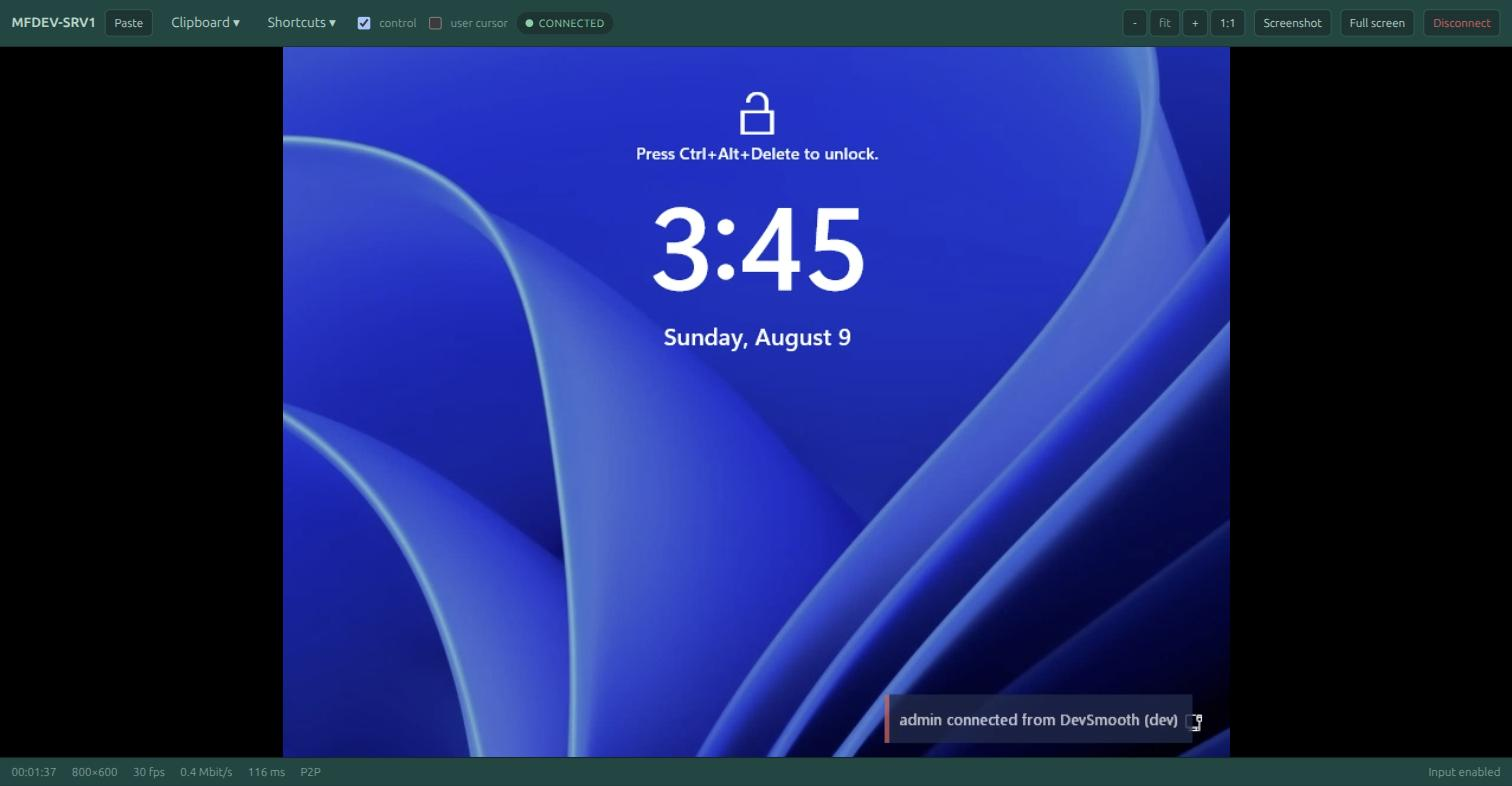
Multi-monitor machines are the rule, not the exception. The Screens menu shows a live thumbnail of every display on the remote machine: open one in its own browser tab, switch the current tab to it, or open them all at once and work across the lot side by side.
Read the docs: connect and manage →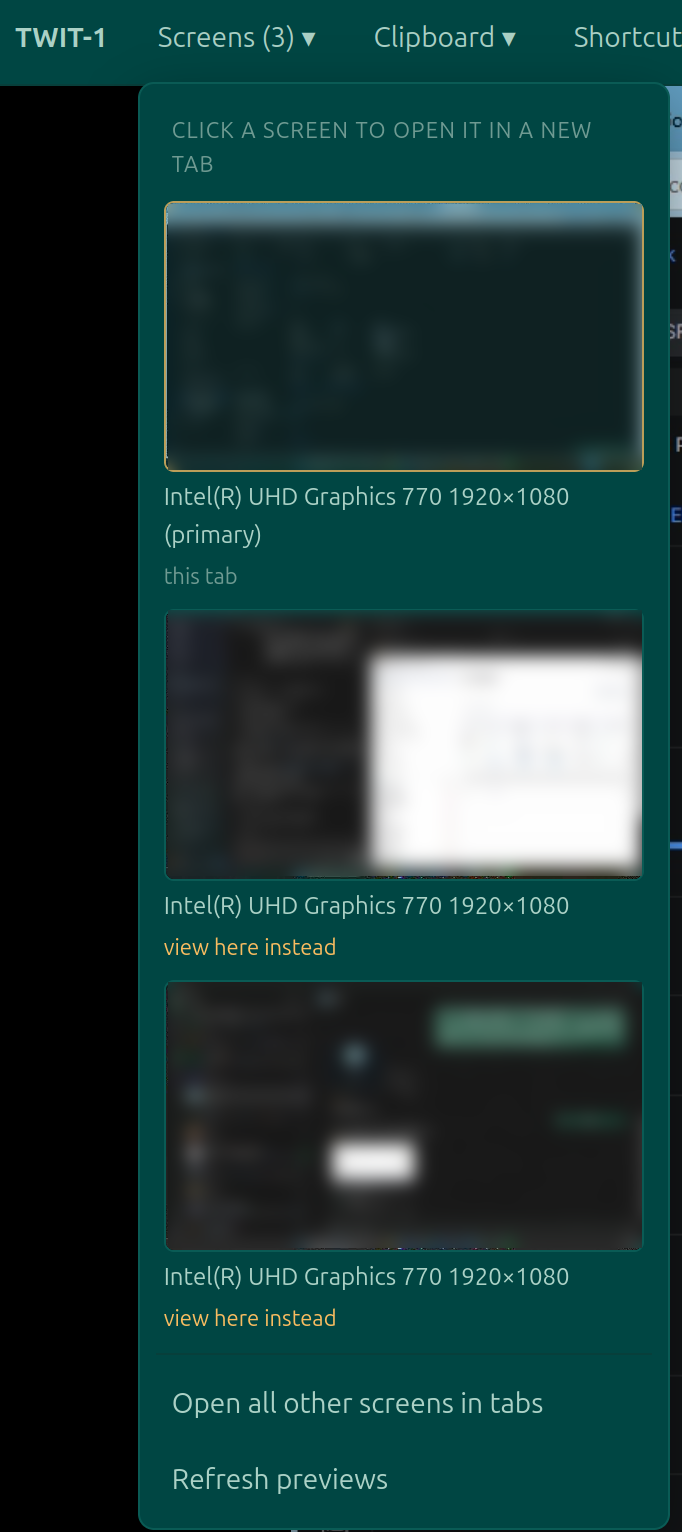
PowerShell or cmd on Windows, a root shell on Linux, on any enrolled machine including headless servers where a desktop has nothing to show. File explorer, processes and services sit one tab away in the same pane.
Read the docs: connect and manage →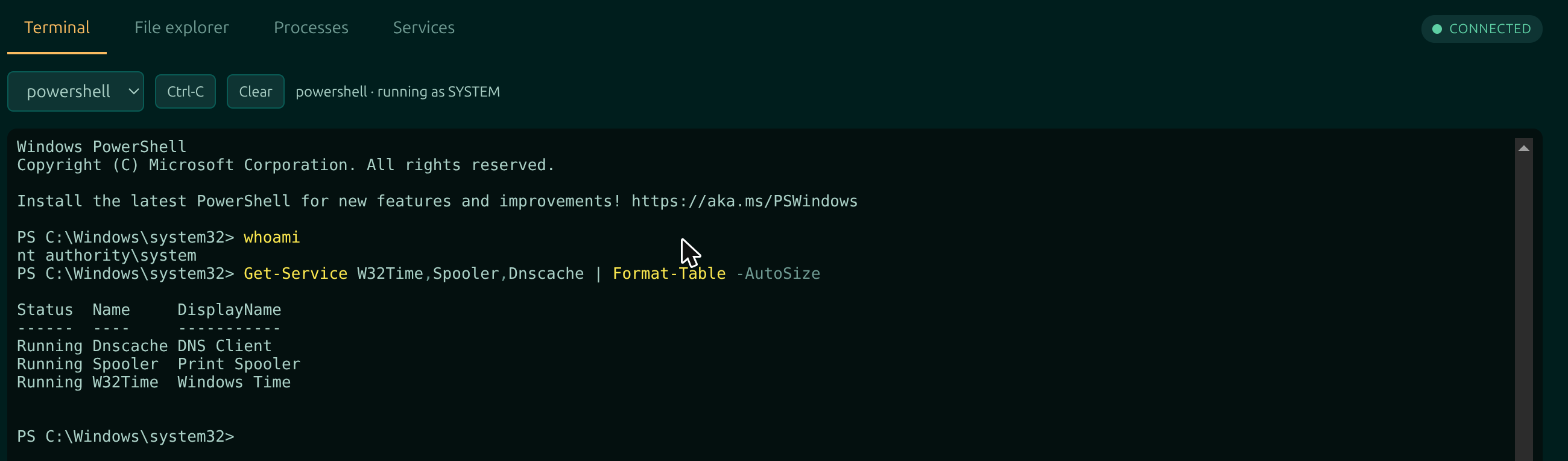
Every device scored out of 100 across thirteen factors: disk encryption, antivirus and EDR, firewall, patching, Secure Boot and more. Anything the machine could not prove is excluded from the score rather than guessed, and the card says exactly which points those were.
Read the docs: the security score →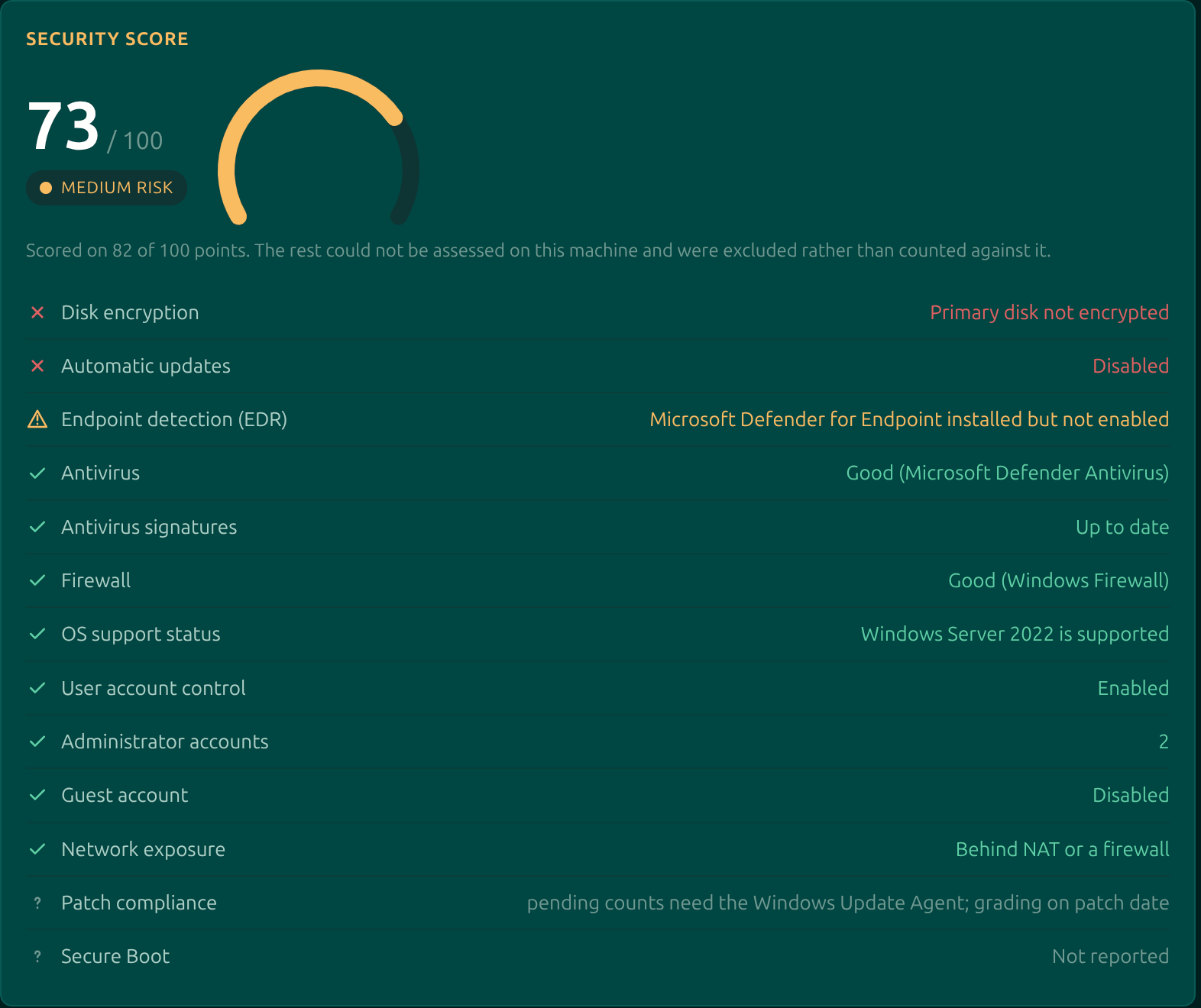
A policy names a weekly window, evaluated in each machine’s own timezone, and how long an update must have been out before it is allowed on. That wait is counted from the day the machine first saw the update, not from a vendor’s release date, so a bad patch pulled in its first week never reaches your fleet.
Read the docs: patching →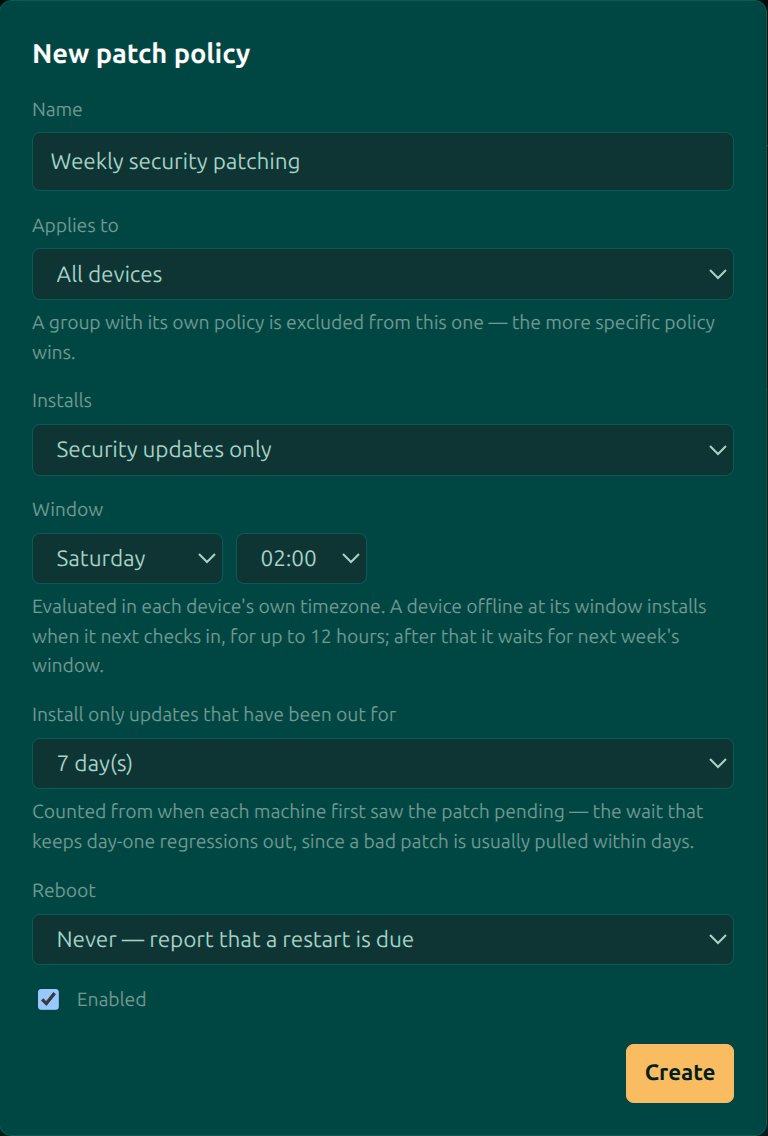
Thresholds for CPU, memory, disk, time offline and Windows crashes, set once for the whole organisation. CPU and memory only alert when the level holds for the window you chose, the email switches say which types are worth a message, and routing rules decide which person gets it.
Read the docs: alerts and settings →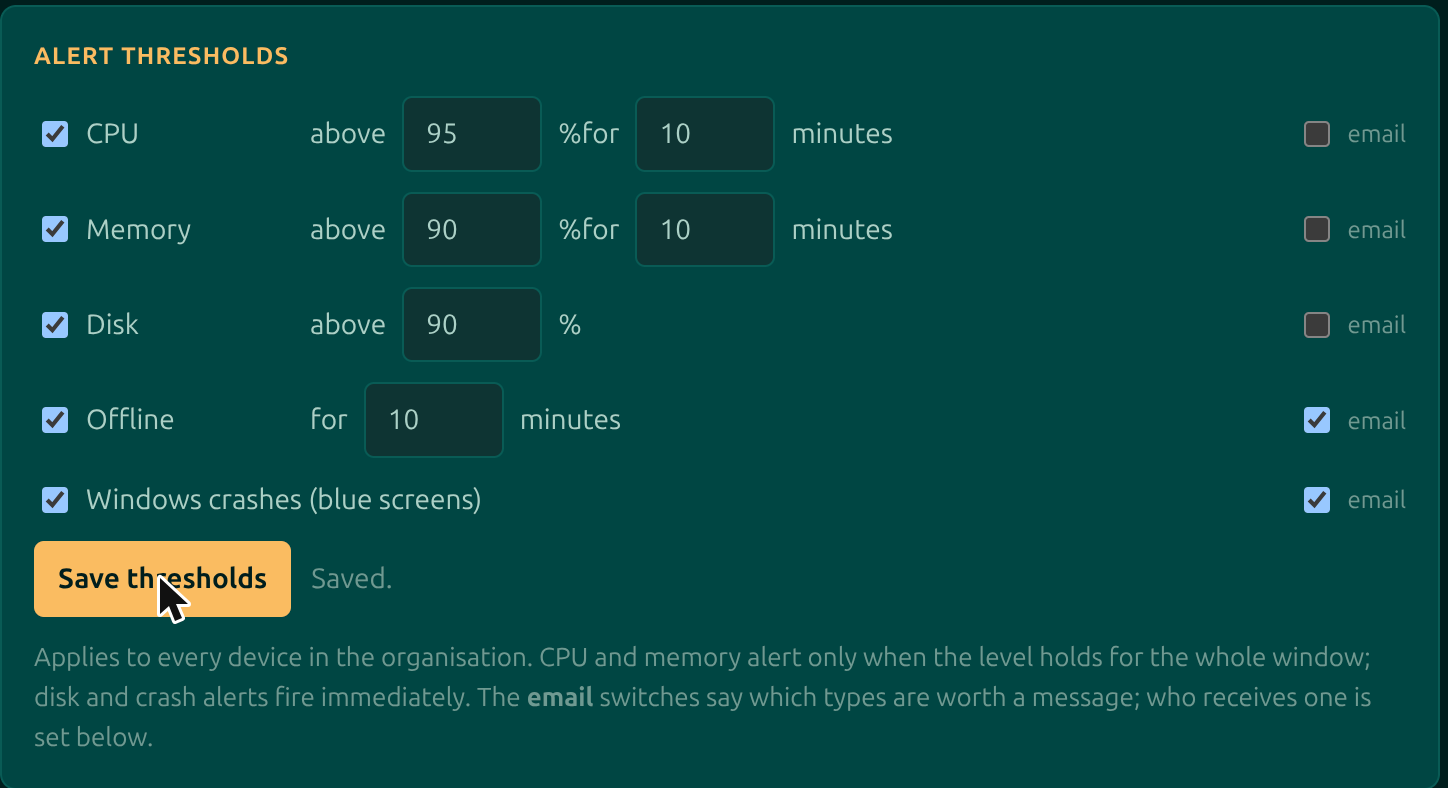
Saved commands chain into flows. This one runs the moment a laptop reported stolen next checks in: clear the mail cache, remove company directories, wipe the home folders. Destructive steps demand the device’s name typed back before they will run at all.
Read the docs: commands and flows →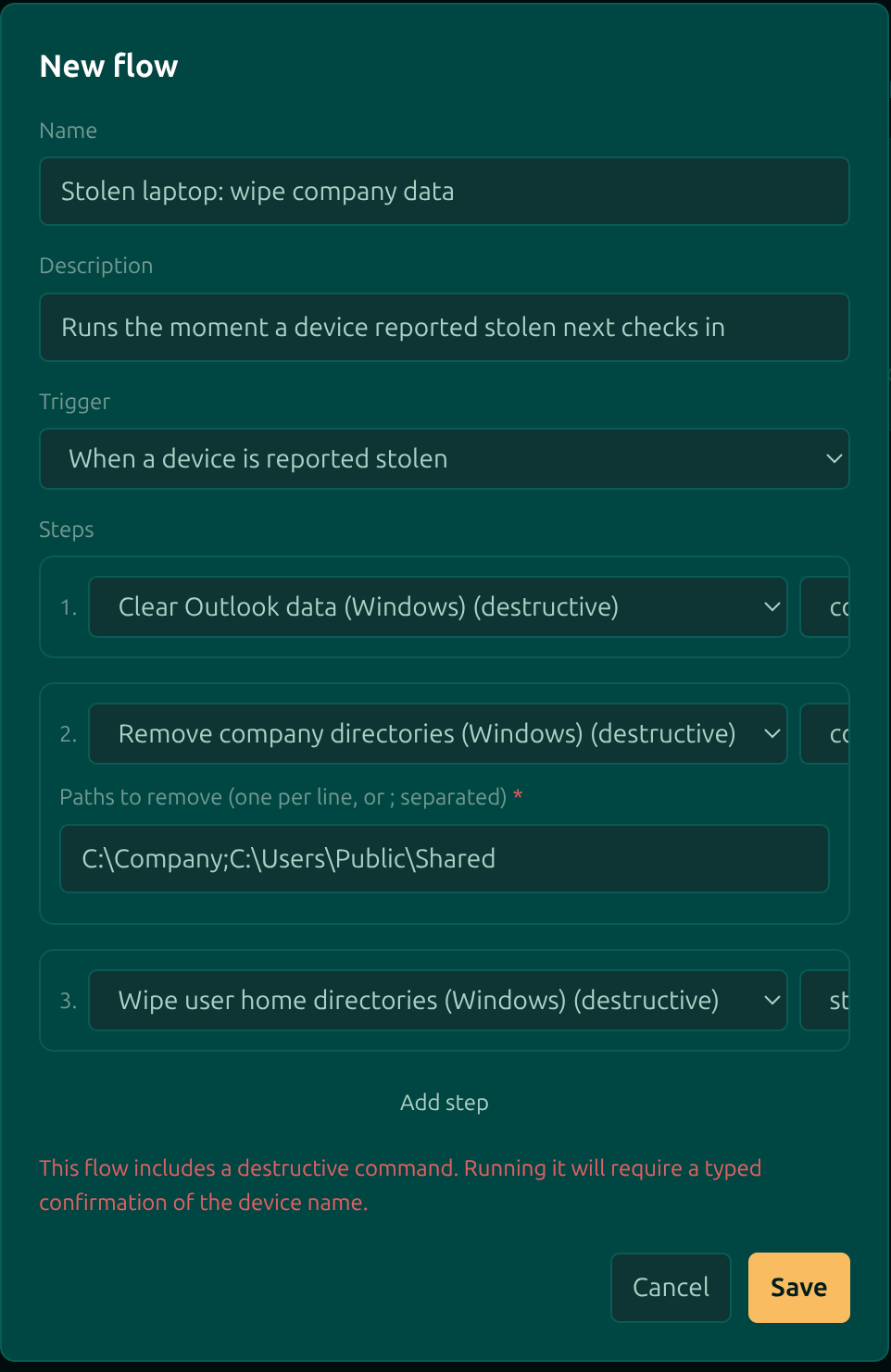
Every sign-in, remote session, script run and settings change, recorded with who, when and how long. The log is append-only: entries cannot be edited or removed, by anyone, which is the only kind of audit trail worth keeping.
Read the docs: the activity log →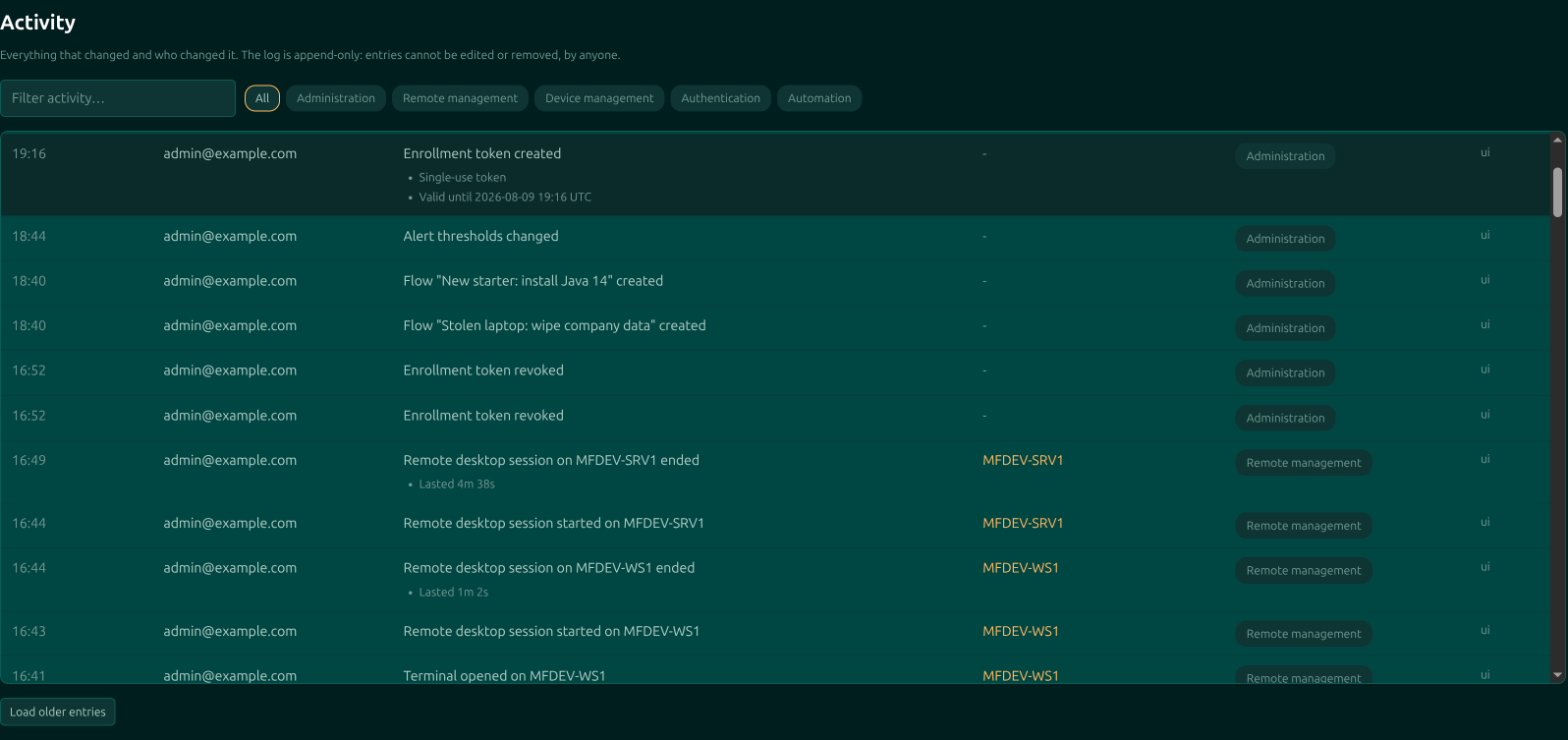
Three steps, and the machine appears in your dashboard within a minute.
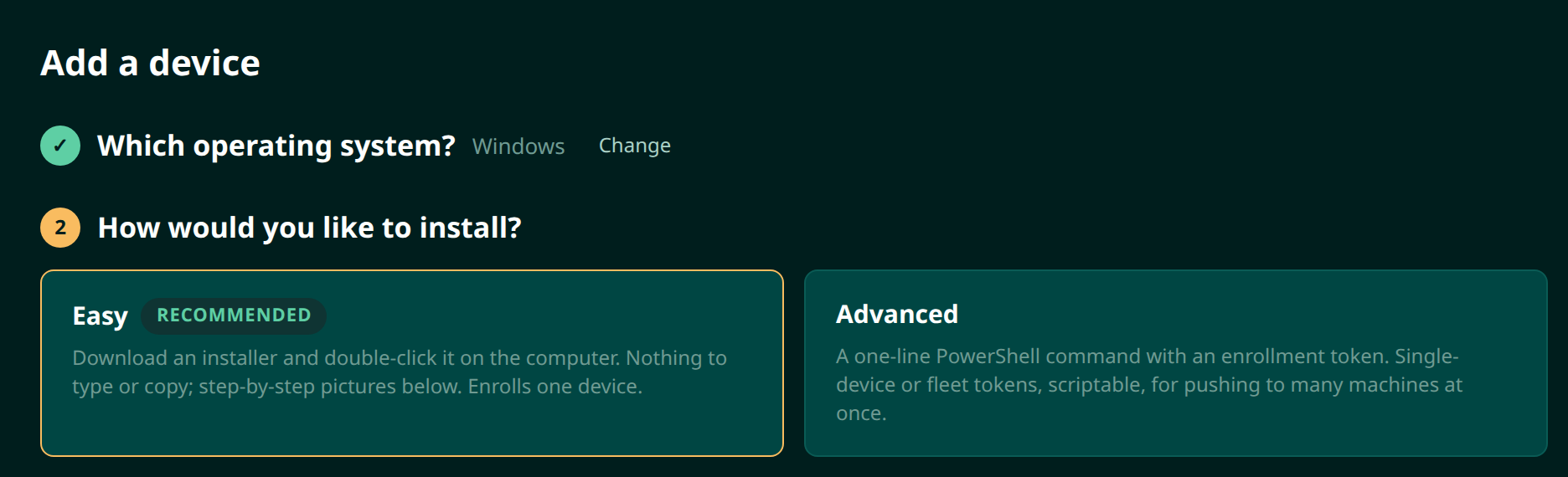
The wizard asks what you are enrolling first, then shows only what that platform needs.
Easy downloads an installer with the enrolment code already inside it, to double-click on the machine. Advanced gives you the PowerShell or shell one-liner, with a fleet token when you are moving a whole estate at once.
The device appears online with its inventory, in the group you file it under. Open a remote desktop session or a terminal straight from the dashboard.
For the machines you don’t manage: a one-off download, a nine-digit code read over the phone, and their explicit permission before you see a thing.
Send anyone your team’s support link. They run one small program, nothing installs, and it shows a nine-digit code that only your team can connect to. They read it out, you type it in, they click Allow, and their screen is in front of you. Close the window and it is over, with nothing left behind.
See how it connects, step by step →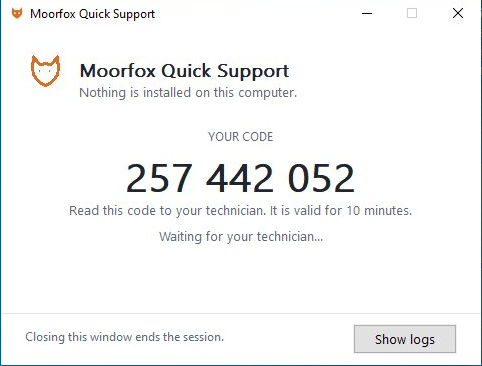
Honest side-by-sides with the tools you might pick instead, our gaps included. We would rather you choose right than choose us.
Sign up, install one agent, and your first machine is on the screen in a couple of minutes. Ten devices are free forever, so there is nothing to decide yet.
Start free Moorfox